Panasonic Lumix G Vario 35-100mm F/4-56 Dxo Review
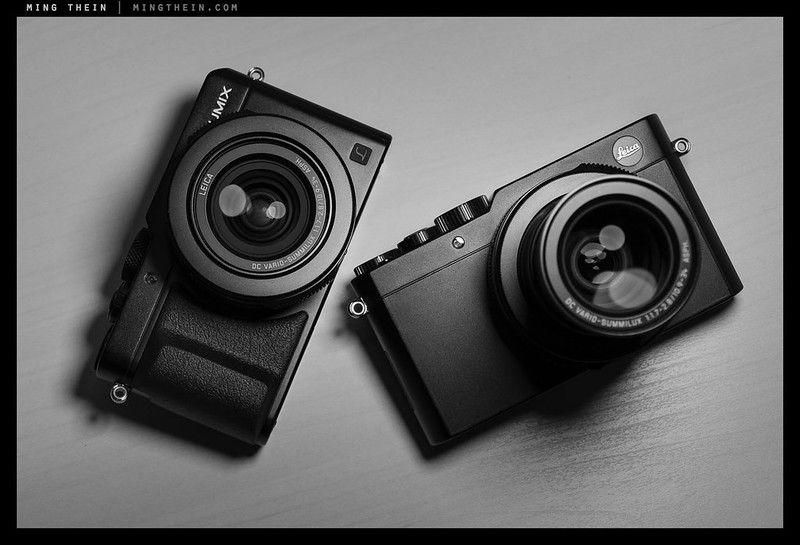
Sony has the RX100 serial. Canon has their Yard Powershots. Nikon…never mind. Merely Panasonic has the LX series, and the accompanying Leica D Lux redesign; I reviewed its predecessor, the LX7/ D Lux 6 some time back, and endemic an LX3 back when it was pretty much the merely selection for a serious compact – variable aspect ratios and all. In the intervening years since the last generation, sensors have grown – even in compacts – and the bar has been raised. I've spent a few days with the LX100/D Lux 109 twins and accept some rather polarising thoughts…
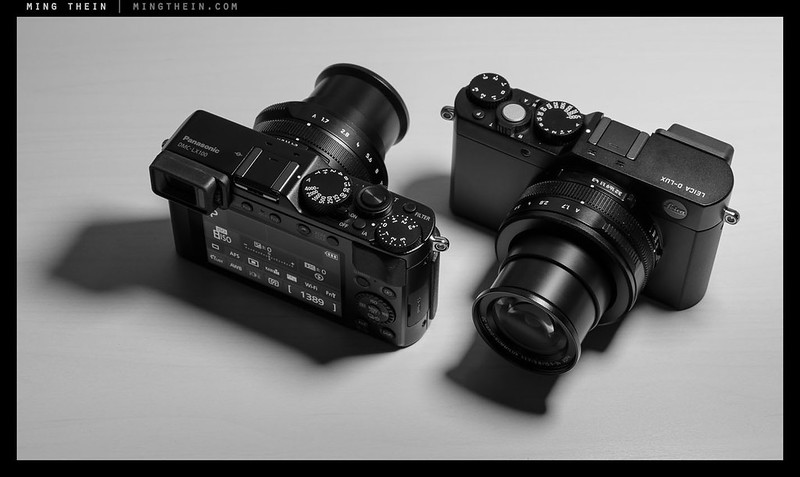
Lenses extend quite a bit when powered on. This is even so very much a wrist strap (especially on the slipperier Leica) or holster photographic camera as opposed to a cervix strap i, fifty-fifty if it has two lugs.
Firstly, the sensor has grown to almost 4/3 (more on this later), but the torso hasn't. And in fact, I think the increase in body size is a skillful affair: it's improved handling markedly, but not compromised portability so much that y'all'd notice. The LX7 was a jacket-pocket camera, and this is pretty much the aforementioned. Panasonic (or Leica) deserve loftier praise on the haptics and ergonomics of this photographic camera. And information technology doesn't practice any impairment that from a pure design standpoint, this is an Very sexy photographic camera – peculiarly the Leica version, with its simplified surfaces. There are mechanical rings for the things that matter similar shutter speed, aperture and exposure bounty; 'A' positions on the dials negate the need for a mode dial, and 'pet smile beauty retouch' modes have thankfully been relegated to two tiny and pretty much negligible buttons on the elevation panel – if only they were reassignable besides, like the other 3 function buttons and D-pad.
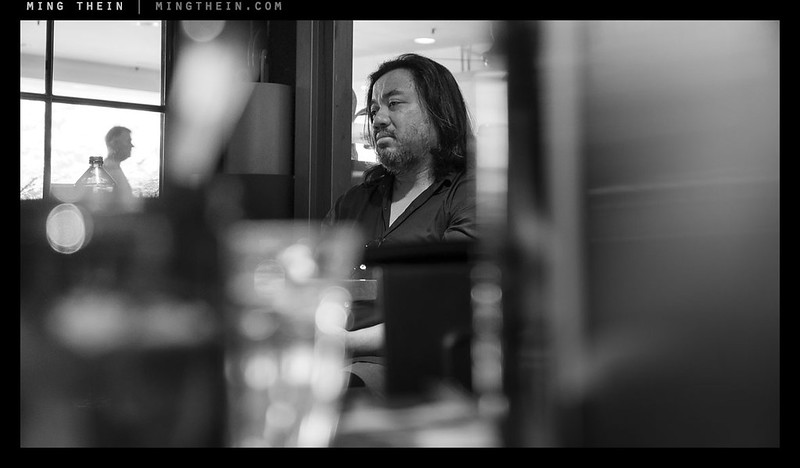
Smug, however resigned satisfaction
What isn't instantly attainable via mechanical controls is easily assigned to shortcut buttons or accessed via the quick menu or LCD in condition mode, which looks much like the top panel function of a traditional SLR. In that location is a good – 2.4 million pixel and noticeably brighter/larger than the RX100III – EVF and enough distance between EVF and controls that y'all tin actually apply it without feeling cramped. Battery life appears solid, but without a detailed estimate I take no mode to tell. I've been averaging ~200 shots more often than not using the EVF with no movement on the indicator before recharging to ready for the next day.
Of what use is a dim lightbulb?
Information technology too has the other plethora of features expected from cameras of this course nowadays – a panorama stitching mode, wifi prototype transfer and a smartphone remote control app, HDMI out, and solid pic modes. Oh yeah, not just solid: 4K30p or 24p at 100mbps, or 1080p60/30. The omission of 50/24/25p at 1080p is curious, though. It's an interestingly video-centric spec for a camera that is poorly geared for video: yous don't accept stepless discontinuity or shutter control, and a real problem with the clicks of the dials beingness transmitted through the camera body both in jerks and sounds if you have to change exposure. Footage looks splendid, as expected – withal I can't speak for 4K at total resolution considering I accept no means of viewing it. I've left the most interesting office til last: information technology has an electronic shutter up to 1/16,000th of a second, and will sync flashes at this speed, too – successfully tested with both SB900s and a Profoto B1 via Air remote. I'm certain there's a use for this…

All the signs of beingness stood upwardly
But – information technology's not perfect, and the misses are frustrating. In that location are some things which tin can't be fixed easily, like the fact the EVF is field-sequential and non simultaneous RGB, so some tearing is experienced with fast panning or moving your centre, and the somewhat variable detent resistance on the dials and knobs (exposure compensation and shutter are perfect, aperture is far likewise loose* and easily moved going in and out of a pocket). The flash is external and detachable, which is an adequate tradeoff for the EVF and most users with that fast lens. A touch screen would have been overnice, besides – the square icons look like buttons that with easily changed settings, to my iphone-biased eyes. Only there are other things which leave y'all scratching your head: why can't the lens ring be assigned to stepless iris for video or menu command or AF point selection, for instance? You get zoom, ISO and off. Even MF override – the obvious option – is not the default selection and is buried in some other menu. Hmmm.
*On the Leicas, just not the Panasonics. It seems that loose discontinuity rings are a contempo trend with Leica of late since all of the new lenses and cameras I've handled accept been consistently easier to turn that older models or equivalent Panasonics. Personally, I prefer the stiffer rings on the LX100. That 1 didn't change discontinuity out of a pocket, the D Lux did.

Earmarked for redevelopment I
And then at that place's the lens-sensor pairing. LX cameras have e'er had variable aspect ratios that maintain the diagonal bending of view of the focal length; which depending on how y'all look at it, either the sensor is larger than you lot expect or the lens smaller. The issue is that the lens' epitome circle never fully covers the sensor. This is again the example for the LX100: the sensor is the same equally the GX7 (and presumably GM1/5, and who knows which other models) at 16MP nominal, but the LX100 never uses more than about 12.7MP of information technology. And because of the heavily reduced prototype circumvolve, foursquare is a ingather of the iv:3 aspect ratio, instead of being a bit taller. (3:2 and 16:ix are longer than iv:3 though, being 4272px, 4480px and 4112px respectively.) Information technology's likewise important to note that moving that aspect ratio switch as well affects the captured area: your raw file will comprise only the selected aspect ratio, and not a tag that crops information technology out of the full sensor area with vignetting. And so, choose wisely when shooting: you gain some existent field of view advantages, but you lot also requite up some flexibility.

Meeting of the band
The upshot is that the engineers accept managed to cram a much faster lens and larger sensor into an overall smaller packet than you'd expect; the lens is an aggressive 24-75/1.7-2.8 equivalent, compared to the 24-ninety/1.iv-2.three of its predecessor. The downside is that it appears the optics rely on some pretty heavy software correction, particularly in the corners. Everything looks great in the centre, though. The jpegs wait pretty good, but the raw files less and then. This is especially noticeable in ACR because the camera is not officially supported nonetheless: to open up the files, you retag the EXIF headers with 'DMC-GX7' (which is why you'll notice a foreign photographic camera in the EXIF of the sample images). ACR reads the images only fine, but doesn't apply any lens profiles – since at that place aren't whatever.
It's pretty obvious at that place's a difference betwixt the raw and JPEG files. Curiously, baloney isn't every bit bad as y'all'd wait, though. I tin but promise that a profile will eke out a flake more operation when the camera is officially supported. For now, the lens is excellent in the middle, outresolving the sensor at all apertures – but not so great at the edges. Information technology has a visually pleasing rendition though, I suppose especially if y'all're doing portraits with the subject mainly in the middle. We tin can also rule out sample variation as both cameras had near identical optical operation.

Under tabular array deals
This leaves us with a lens that is fixed and non quite as perfect as nosotros'd similar, mated to a sensor that'due south big for a meaty but all the same a flake smaller than acceptable for larger prints. This makes for easy file handling, but means you actually need to watch your shot discipline to get the virtually out of the limited number of pixels. I tin can't assistance only wonder if a improve pick would have been go with the 20MP 1″ sensor that's in the FZ1000/ RX100III, and utilize the extra lens size to eke out even more speed – f1.4-two.three like the previous camera, or even fleck faster at the long finish maybe. Fortunately, the decent IS organisation and EVF (for face-bracing) makes this quite a fleck easier. Take intendance with focusing, though: the aperture is fast plenty that misses will be evidently visible at full size, only not necessarily during capture or on-camera playback. I was caught out by one of the cameras being defective (consistently forepart-focusing) resulting in a number of unusable images. Having tested 3 units now, I think nosotros can dominion that out every bit a one-off incident. It should be capable of extremely good pixel acuity especially in the eye; if yous're not getting that, chances are information technology's a focusing problem.

Triangular segregation
Actual pixel-quality is what nosotros're familiar with from M4/three: solid if you become your exposure right (which is easy considering the camera has an exposure zebra with adaptable levels) but with limited breadth for highlight recovery, or pushing shadows at higher ISOs. Color is academic because you can change that quite easily with a profile – information technology's worth noting that there's picayune change in tonal/spectral response at higher sensitivities though, which is a skilful thing. That said, I'd suggest limiting auto-ISO to 800 or lower – firstly because your lens is fast enough, and secondly, the IS system is skillful enough to make those marginal one/20-ish shutter speeds mostly fine; the pixel density per degree FOV isn't that critically high, either. But the principal reason is considering nosotros have no control over the automobile-ISO behaviour: it's prepare an upper threshold, and that's it. We actually need at least a 1/FL multiplier option.

Welcome to modern travel
This leaves u.s. with two questions: who's it for, and how does it compare against the competition – including its GM5 sibling, which now has an EVF? I'll address the latter question first. Firstly, I don't think it's a Ricoh GR replacement: that photographic camera punches at a much higher level of epitome quality, and is really pocketable into fairly small pockets because nil protrudes when powered downward. The GR feels more similar a serious tool to me; the LX100 / D Lux 109 is a fun camera, but doesn't quite make it into the big leagues prototype quality-wise. It'due south the same toll every bit the GM5 and 12-32/three.5-five.6 kit lens; unless it's going to be part of an existing M4/3 kit, I'd take the LX100 / D Lux 109 for two reasons: the controls are enormously meliorate, and preparing for shooting with the GM5 is a three-step process: lens cap off, extend lens, power on. The LX100 can be i pace (power on) with the optional petal lens cap. That makes a large difference in exercise. Information technology'due south also a flake more versatile in low light, with a lens that's 2 stops faster (albeit the 12-32 is optically better). I haven't used the latest Catechism offerings, but it'southward a tougher telephone call against the RX100III: that has a tilt screen, quite a bit more resolution, poorer high ISO functioning, weaker video, a bit less manual command, but once again becomes pocketable. I recollect information technology boils down to firstly which works better for you personally, or whether any one of the individual features is critical to y'all.

Izakaya nights
Who's information technology for is a much tougher question to answer; I'd say it'due south a camera of averages. For the majority of people – mildly enthusiastic photographers, holiday snappers, families and the like – again, information technology's going to be more camera than they need. In fact, I call up information technology'due south going to exist somewhat intimidating because of the apparent lack of automation and unexpected results if one of the dials inadvertently gets knocked off position. It will be a clear step up from the cameraphone or compact and take more than enough resolution for Facebook or electronic mail. For the serious amateur coming from an older camera or smaller format, the size and level of control volition delight and liberate. For those coming from current-generation M4/3, operation will be as-expected, but once again, the form factor will be liberating – peradventure liberating enough to just pair it with a GM5 and say 75/1.8 or 35-100/ii.8 for telephoto needs, and be washed completely. Travellers on a serious weight budget volition dearest it.
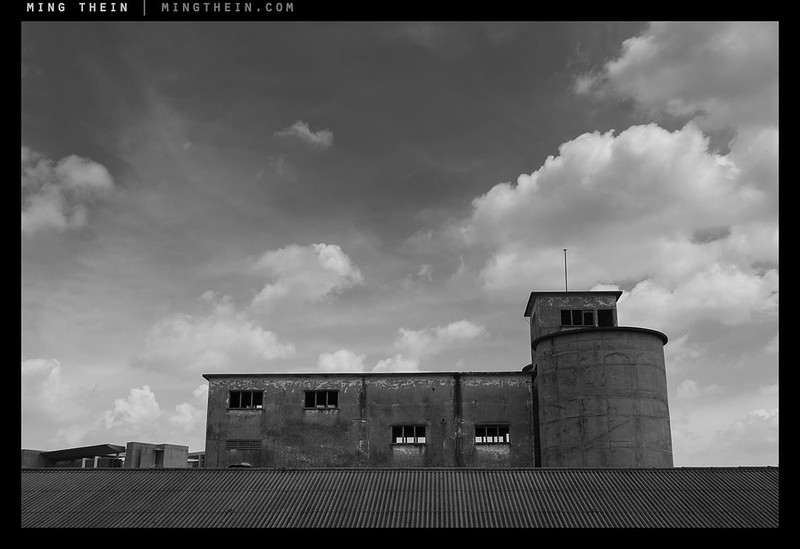
Earmarked for redevelopment II
You'll notice I've left out the very serious lensman. The kind of person who prints large or Ultraprints or both. The kind of photographer who owns different tripods for different purposes and uses Otii and medium format, and might perhaps write an occasional review. I realise that my needs and expectations are rather unlike to the majority of consumers, amateurs and enthusiasts, which is why I've left it til last. It'due south too why I'm going to preface it by proverb that what works for me may not be the best choice for everybody; remember about your output objectives first. I really enjoyed shooting with the LX100 / D Lux 109; there is something intrinsically right about the haptics, controls and tactility of this photographic camera. It seems to become abroad from nearly of the historical problems I've had with Panasonic around consumer electronics controls and menus rather than photographic ones; in many means, I feel this is a successor to both the original Leica Digilux 2/ Panasonic LC1 and the modernistic Leica M: completely user-controllable with ease, compact and very detached, and in a smaller than expected form cistron. In other words: a very sensibly-chosen set up of compromises leading to an enjoyable photographic feel – and thus images where in that location may not otherwise accept been any.

Confusion of management
I realise my hesitation with the hardware has been one of expectation: arroyo information technology thinking it'due south a meaty and you'll be pleasantly surprised; arroyo it with the expectations that information technology's going to match the all-time of M4/3 and perhaps come up close to a GR and you're going to exist slightly disappointed on the image quality front. The controls and ergonomics rival that of the GR. Yet, if yous stop and retrieve well-nigh information technology, it manages to do things that neither of those types of camera tin exercise, in a smaller bundle. Information technology handily beats the Sony R1 from many years ago, which was the offset large-sensor fixed-zoom all-in-one – and is about the size of that camera'south handgrip solitary. The LX100 / D Lux 109 is so shut to being a perfect out-of-the-park home run on all counts that it's honestly a bit painful; hopefully proper ACR support and lens profile will bring things a bit closer to the boundaries. Nevertheless the reality is that even every bit a very serious photographer, I can't see myself carrying two compacts; it'southward either this or the GR, but not both. And I'k not certain this supplants the D750-50/1.8G combination on the fun and dependability factors (it doesn't do any damage that the D750 is correct upwardly there in the epitome quality section, either). Bottom line is, I'd have problem committing to one – the choices are and so practiced – and then diverse – that there'due south a identify for them all if your wallet can stand information technology, especially when it's that joy of the shooting experience you're trying to rekindle on your reanimation between assignments. I suppose it's a skilful thing I don't have to decide, so. MT
The Panasonic LX100 is bachelor hither from B&H.
The Leica D-Lux 109 is bachelor here from B&H or the Leica boutiques; give thanks y'all to Leica Malaysia for the loan.
If you institute this review useful, there'southward a contribution/donation push on the right sidebar 🙂
__________________
Visit the Teaching Store to upwardly your photographic game – including workshop and Photoshop Workflow videos and the customized E-mail Schoolhouse of Photography; or go mobile with the Photography Compendium for iPad. You can also get your gear from B&H and Amazon. Prices are the same every bit normal, yet a pocket-sized portion of your purchase value is referred back to me. Thanks!
Don't forget to like united states of america on Facebook and join the reader Flickr group!

Images and content copyright Ming Thein | mingthein.com 2012 onwards. All rights reserved
Source: https://blog.mingthein.com/2014/11/12/opinion-review-the-panasonic-lx100-leica-d-lux-109/
0 Response to "Panasonic Lumix G Vario 35-100mm F/4-56 Dxo Review"
Post a Comment